
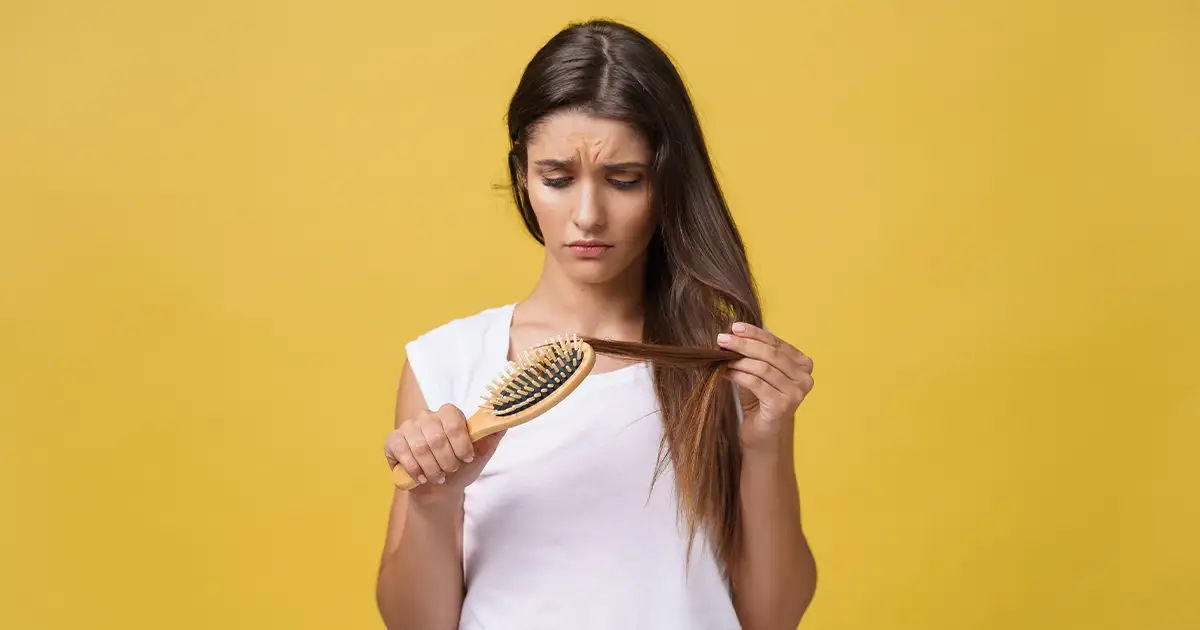
You see it in the shower drain. On your pillow. In the brush. Your part line looks wider than it did last year, and you can see more scalp at the crown than you’re comfortable with. Maybe you’ve started parting your hair differently, wearing it up more, or quietly panicking under fluorescent lighting. Hair loss in women is one of the most distressing — and most under-discussed — symptoms of hormonal imbalance. It hits confidence in a way most hormone issues don’t, and the standard advice (“eat better, use this shampoo”) rarely addresses the actual cause. This guide breaks down the hormones behind female hair loss, the deficiencies that quietly worsen it, and the nutrition approach that genuinely supports regrowth.
What’s Normal vs What’s Not
The average woman loses 50 to 100 hairs per day as part of the normal hair cycle. According to the American Academy of Dermatology, sustained shedding above 100 hairs daily crosses from normal cycling into measurable hair loss.
Signs worth taking seriously:
- A part line that’s visibly widening over months
- Reduced ponytail thickness (the most reliable home test)
- Hair coming out in clumps rather than individual strands
- Patchy hair loss in specific areas
- Sudden, sharp shedding after stress or illness
- Visible scalp where you previously had density
Any of these patterns deserves a closer look at hormones and, ideally, a dermatologist evaluation.
Thyroid Dysfunction: The Most Common Hidden Cause
Thyroid issues are the single most overlooked cause of female hair loss. The thyroid governs metabolism in every cell, including the cells that build hair follicles. When thyroid output drops, hair growth slows, follicles weaken, and shedding increases — often in a diffuse pattern across the scalp.
Hypothyroidism is dramatically more common in women than men, and risk rises significantly after 35. The classic hair-loss pattern with thyroid issues:
- Diffuse thinning (not patchy)
- Hair feels drier, more brittle, and breaks easily
- Loss of the outer third of the eyebrows
- Slower hair growth overall
- Often paired with fatigue, weight gain, cold intolerance, and constipation
If hair loss is happening alongside persistent exhaustion, the thyroid-fatigue connection is broken down in our guide to hormone fatigue. A full thyroid panel — TSH, free T3, free T4, and antibodies — is essential. The standard TSH-only test misses many cases of early dysfunction.
Androgens: When Testosterone and DHEA Drive Hair Loss
Women produce small amounts of testosterone and DHEA, both of which can convert into DHT (dihydrotestosterone) — the most aggressive form of androgen. When DHT binds to hair follicle receptors, it gradually miniaturizes them, producing the classic pattern of female hair loss: thinning at the crown and along the part line.
Androgen-driven hair loss is the dominant pattern in PCOS, where excess testosterone is one of the defining features. If your hair loss comes with acne, irregular periods, weight gain around the belly, or excess hair growth on the face or body, PCOS may be the underlying driver — covered fully in our PCOS diet guide.
Androgens also rise relative to estrogen during perimenopause as estrogen declines, which is why so many women in their 40s experience new hair thinning — part of the broader transition explained in our complete perimenopause guide.
Stress also raises androgens through the cortisol-DHEA pathway — meaning chronic stress directly contributes to hair loss even in women without PCOS.
Estrogen: Your Hair’s Protective Hormone
Estrogen keeps hair in the growth phase longer, supports follicle health, and contributes to thickness and shine. When estrogen drops — most notably in perimenopause and postpartum — follicles shift more rapidly into the shedding phase, and density decreases.
The estrogen-related pattern usually looks like:
- Gradual thinning across the whole scalp
- Loss of body and shine
- Hair becoming finer over time, not just less
- Slower regrowth after normal shedding
This is also why postpartum hair loss is so dramatic — estrogen plummets after birth, causing release of the months of hair that “should have” shed during pregnancy. Postpartum shedding usually resolves within 6–12 months without intervention.
Heavy menstrual bleeding compounds the problem by depleting iron, one of the most critical nutrients for hair growth — covered in our guide to heavy and irregular periods.
Nutrient Deficiencies That Drive Hair Loss
Even with balanced hormones, certain nutrient gaps will cause hair loss until they’re filled. The most common in women losing hair:
- Iron and ferritin — The single biggest deficiency in women losing hair. Ferritin (iron storage) needs to be above 70 ng/mL for healthy growth, but standard lab ranges go as low as 15. Many women are “in range” but still functionally deficient for hair.
- Protein — Hair is built from keratin. Undereating protein (under 60g daily) is one of the fastest triggers for shedding.
- Zinc — Supports follicle function and slows DHT production.
- Vitamin D — Low levels are strongly linked to shedding and slow regrowth.
- B vitamins (B12, biotin, folate) — Essential for hair cell production.
- Omega-3 fatty acids — Reduce scalp inflammation.
- Selenium — Critical for thyroid function, which then affects hair.
A combined deficiency in iron, vitamin D, and protein is so common that addressing those three alone often produces visible regrowth within 4–6 months.
Nutrient-Dense Eating for Hair Regrowth
The hair you grow today depends on what you eat over the next 3–6 months. There’s no fast shortcut, but the right foods consistently produce visible results.
Build every plate around these:
- Iron-rich foods — Grass-fed beef, liver (the single best food for hair), lentils, spinach, pumpkin seeds. Pair with vitamin C to maximize absorption.
- Quality protein at every meal — 25–30g from eggs, fish, poultry, meat, Greek yogurt, or legumes
- Zinc-rich foods — Pumpkin seeds, oysters, beef, chickpeas
- Healthy fats — Avocado, olive oil, fatty fish, walnuts
- Vitamin D sources — Egg yolks, fatty fish, fortified foods (most women still need supplementation in winter)
- Cruciferous vegetables daily — Broccoli, cauliflower, Brussels sprouts
- Bone broth or collagen — Supports hair’s structural proteins
What to limit:
- Extreme caloric restriction (the fastest trigger for hair shedding)
- Crash diets and fasting that drops calories below your needs
- Excessive sugar and refined carbs (drives inflammation and androgens)
If you’ve been under-eating to lose weight, your body deprioritizes hair growth before almost anything else. The metabolic connection is detailed in our guide to weight gain after 35.
Realistic Timeline for Hair Regrowth
This is where most women lose patience. Hair has a long growth cycle — what you eat today affects the hair you grow 3–6 months from now.
Realistic expectations:
- Weeks 1–4: Energy and digestion improve. No visible hair change yet.
- Weeks 4–8: Shedding may decrease. New growth begins at the follicle level.
- Months 3–4: Short new hairs become visible at the hairline and crown.
- Months 6–9: Visible density improvement. Part line begins to narrow.
- 12 months: Substantial regrowth for nutrition- or stress-driven hair loss.
Women who quit at month 2 because “nothing is happening” are usually 4–8 weeks from their first visible new growth.
The Solution: Hair-Supportive Eating, Already Mapped Out
Knowing what to eat for hair is one thing. Actually building a daily nutrition pattern that consistently delivers iron, protein, zinc, vitamin D, and omega-3s across every meal is where most women hit the wall.
The Happy Hormones 4-Week Meal Plan is built around exactly the nutrients hair growth depends on. Every meal includes the iron, protein, healthy fats, and micronutrients your body needs to rebuild follicle health — alongside the broader hormone-balancing structure that addresses the thyroid, androgens, and estrogen patterns driving hair loss in the first place.
Frequently Asked Questions
Why is my hair falling out so much?
The most common causes of hair loss in women are thyroid dysfunction, iron and protein deficiency, androgen imbalances (including PCOS), perimenopause, chronic stress, and severe calorie restriction. Many women have multiple causes at once. A blood panel covering thyroid, ferritin, vitamin D, and B12 — alongside a careful look at nutrition and stress — usually points to the root cause.
Can hormone imbalance really cause hair loss?
Yes. Thyroid dysfunction is the most common hormonal driver. Excess androgens (testosterone, DHEA, DHT) directly miniaturize hair follicles, causing the classic crown-and-part-line thinning. Declining estrogen during perimenopause shifts hair into the shedding phase faster. Chronic high cortisol from stress disrupts every other hormone involved in hair growth.
How long until I see hair regrowth?
Hair has a long growth cycle, so visible regrowth typically takes 3–6 months of consistent nutrition and hormone support. Shedding usually decreases first (within 4–8 weeks), then new short hairs become visible at the hairline and crown (months 3–4), then density improves (months 6–12). Patience and consistency matter more than any single product or supplement.
Should I see a doctor for hair loss?
Yes — particularly if hair loss is sudden, severe, patchy, or accompanied by other symptoms (fatigue, weight changes, irregular periods, skin or nail changes). A dermatologist can examine the pattern and rule out conditions like alopecia areata or scarring alopecia, and your primary doctor can run blood work for thyroid, iron, and other causes. Nutrition supports regrowth but doesn’t replace medical evaluation for significant loss.
The Bottom Line
Hair loss isn’t vanity — it’s a measurable signal that your hormones or nutrient status need support. With the right blood work, the right foods, and the patience to let hair’s slow growth cycle catch up, regrowth is genuinely possible for most women. The Happy Hormones 4-Week Meal Plan gives you the structured, nutrient-dense plan to feed your hormones and your hair from the inside out.
Medical Disclaimer: This content is for informational and educational purposes only and is not a substitute for professional medical advice, diagnosis, or treatment. Hair loss can be caused by conditions including thyroid disease, autoimmune disorders (alopecia areata, lupus), scarring alopecia, severe nutrient deficiencies, medication side effects, scalp infections, and other medical conditions that require proper evaluation by a dermatologist or healthcare provider. Sudden, severe, or patchy hair loss should always be medically assessed. Decisions about supplements, medications (including minoxidil, spironolactone, or finasteride), and hormonal treatments should be made with a qualified healthcare provider. Individual results may vary.