
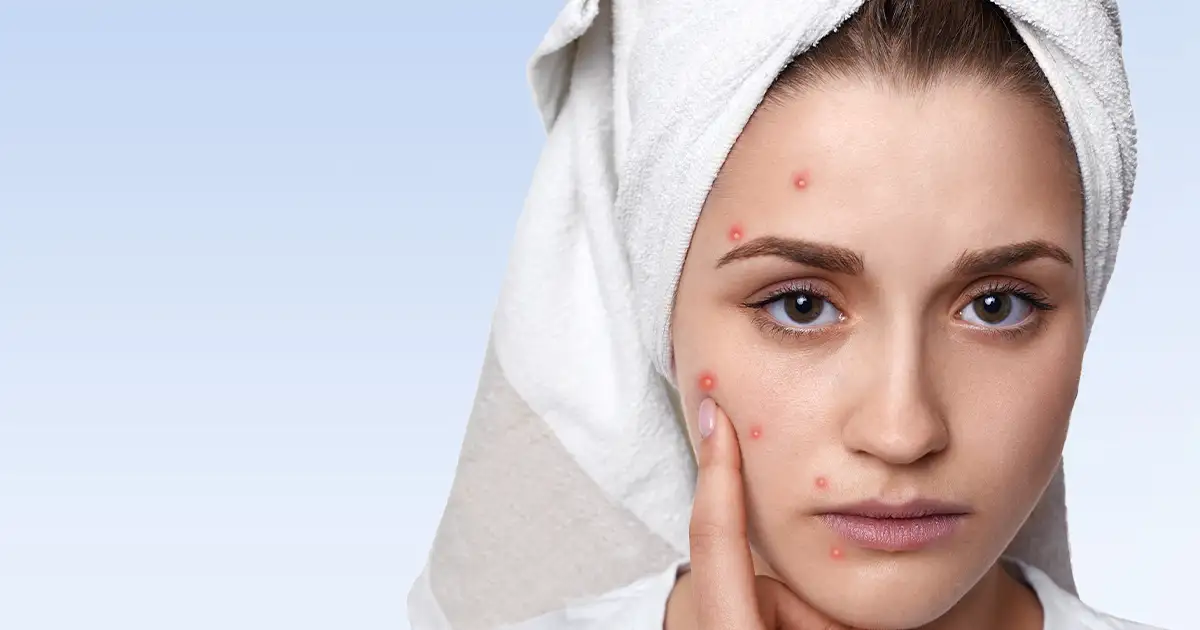
You had clear skin for a decade. Maybe two. Then somewhere in your 30s, the deep, painful breakouts started showing up — right along your jawline, around your chin, sometimes neck and back too. They flare before your period, take weeks to heal, and leave dark marks behind. The skincare routine that worked for years suddenly does nothing. If you’re frustrated, embarrassed, and tired of being told to “wash your face better,” you’re dealing with hormonal acne — a fundamentally different problem than the teenage version, with very different solutions. This guide breaks down exactly what’s driving adult breakouts and the nutrition approach that calms them from the inside out.
Why You’re Breaking Out Now
Adult hormonal acne almost always follows a specific pattern: deep, cystic bumps along the lower face, jawline, chin, and sometimes neck. It flares cyclically — the week before your period, during stressful seasons, or after starting/stopping hormonal birth control.
According to the American Academy of Dermatology, adult acne affects roughly 15% of women, and rates have been climbing for decades. The biggest triggers in 30s and 40s women: cyclical hormone fluctuations, chronic stress, PCOS, perimenopause, gut imbalances, and the inflammatory load of modern diets.
The teenage acne playbook (harsh cleansers, salicylic acid, drying everything out) often makes adult acne worse. Adult hormonal acne is an internal inflammation problem first, and a skin problem second.
Androgens and Sebum: The Core Mechanism
The same hormones behind female pattern hair loss are usually behind hormonal acne: androgens. Testosterone, DHEA, and DHT signal your sebaceous glands to produce more oil (sebum). That excess oil mixes with dead skin cells, clogs pores, feeds acne-causing bacteria, and inflames the surrounding tissue — producing the deep, painful cysts that define adult hormonal acne.
Two patterns to recognize:
- Cyclical breakouts before your period — Progesterone drops, leaving androgens proportionally higher; sebum spikes 5–7 days before bleeding starts
- Constant breakouts year-round — Often indicates higher baseline androgens, common in PCOS
If your acne comes with irregular periods, weight gain around the midsection, hair thinning on the scalp, or excess hair growth elsewhere, PCOS is a likely driver — covered in detail in our PCOS diet guide. The same androgen mechanism that drives acne also drives the hair thinning explored in our hair loss guide.
The Gut-Skin-Hormone Connection
Your gut and your skin are more closely linked than most women realize. An estimated 70% of adult acne sufferers have gut imbalances driving inflammation that shows up on the face.
The pattern works like this: poor gut health (from antibiotics, processed foods, chronic stress, alcohol) damages the intestinal lining. Inflammatory compounds leak into the bloodstream. The body raises inflammation system-wide, which directly drives sebum production and acne severity. Gut imbalances also impair the body’s ability to clear excess hormones — letting androgens recirculate instead of being eliminated.
Signs gut health is driving your acne:
- Bloating, gas, or irregular bowel movements
- Frequent food sensitivities
- Brain fog or mood symptoms alongside skin issues
- Acne that worsens after eating certain foods
Rebuilding gut health (fiber, fermented foods, eliminating triggers) is often the first step that finally moves stubborn adult acne.
Dairy and Sugar: The Two Biggest Triggers
Two foods consistently drive hormonal acne harder than anything else: dairy and refined sugar.
Dairy — Especially conventional milk — contains hormones that stimulate insulin and IGF-1 (insulin-like growth factor), both of which directly raise androgen production and sebum. Skim and low-fat dairy tend to be worse than full-fat. Many women see significant skin improvement within 4–8 weeks of removing dairy entirely.
Refined sugar and high-glycemic carbs — Spike insulin sharply, which raises androgens and inflammation. White bread, pastries, sugary drinks, and even “healthy” granolas can drive cyclical breakouts.
Other inflammatory triggers worth reducing:
- Industrial seed oils (soybean, corn, canola)
- Excessive alcohol (burdens the liver’s hormone-clearing capacity)
- Whey protein supplements (raise IGF-1 similarly to dairy)
- Highly processed foods low in fiber and nutrients
This doesn’t mean perfection. It means making these foods occasional, not daily. Most women see clearer skin within 6–8 weeks of consistent dietary shifts.
Liver Detox: The Underrated Acne Factor
Your liver is responsible for breaking down and clearing excess hormones — including the androgens driving your breakouts. When the liver is overwhelmed (from alcohol, processed foods, medications, environmental toxins), hormones recirculate instead of being eliminated. The result: more androgens in the system, more sebum, more acne.
Foods that genuinely support liver detoxification:
- Cruciferous vegetables (broccoli, cauliflower, Brussels sprouts, cabbage) — daily
- Leafy greens (spinach, kale, arugula)
- Beets, carrots, artichokes
- Garlic and onions
- Bitter foods (dandelion greens, radicchio, lemon water)
Adequate fiber is also essential — fiber binds to estrogens and other hormones in the gut and carries them out. Without enough fiber, hormones the liver tried to clear get reabsorbed.
Anti-Inflammatory Eating for Clear Skin
Beyond avoiding triggers, certain foods actively calm the inflammation behind hormonal acne:
Build every plate around:
- Fatty fish (salmon, sardines, mackerel) — omega-3s reduce skin inflammation
- Cruciferous vegetables daily — support liver hormone clearance
- Berries — polyphenols protect skin and reduce oxidative stress
- Leafy greens — magnesium, folate, antioxidants
- Zinc-rich foods (pumpkin seeds, oysters, beef) — zinc is one of the best-researched nutrients for acne
- Probiotic foods (sauerkraut, kimchi, kefir) — rebuild gut health
- Quality protein — 25–30g per meal stabilizes blood sugar and supports skin repair
- Healthy fats (avocado, olive oil, nuts) — anti-inflammatory and hormone-supporting
Habits that compound the diet:
- Drink 2+ liters of water daily
- Sleep 7–9 hours (skin repairs at night)
- Manage stress aggressively — cortisol directly worsens acne
The same anti-inflammatory framework supports broader hormonal health — the full structure is in our complete guide to balancing hormones naturally.
The Solution: Skin-Clearing Meal Plans, Done For You
Knowing what to eat for clear skin is one thing. Actually building a week of dairy-free, low-sugar, anti-inflammatory, liver-supportive meals — every week, around real life — is what stops most women from seeing results.
The Happy Hormones 4-Week Meal Plan is built around exactly the principles hormonal acne responds to: dairy-free options, low-glycemic carbs, anti-inflammatory ingredients, daily cruciferous vegetables, and the right protein-fat balance for stable blood sugar and steady hormones. Every meal supports the gut, the liver, and the hormonal balance underneath your skin.
Frequently Asked Questions
Why am I getting acne in my 30s when I had clear skin before?
Adult hormonal acne in your 30s and 40s is usually driven by androgen imbalances, perimenopause-related hormone shifts, PCOS, chronic stress, or gut dysfunction. Hormone-driven breakouts tend to appear along the lower face, chin, and jawline — different from the forehead/T-zone pattern of teenage acne. The skincare strategies that worked before often don’t address adult hormonal acne because it’s an internal issue, not a surface one.
What foods cause hormonal acne?
The biggest food triggers are dairy (especially skim and low-fat milk), refined sugar, high-glycemic carbs, industrial seed oils, excessive alcohol, and whey protein. These foods raise insulin and IGF-1, which directly increase androgen production and sebum. Most women see significant skin improvement within 6–8 weeks of consistently reducing these triggers.
How long does it take to clear hormonal acne with diet?
Most women see initial improvements within 4–6 weeks of consistent anti-inflammatory eating and trigger removal. Substantial clearing typically takes 8–12 weeks because skin cells turn over on a roughly 28-day cycle. Patience and consistency matter more than perfection. Persistent or severe acne should always be evaluated by a dermatologist, especially if scarring is occurring.
The Bottom Line
Hormonal acne isn’t a skincare problem — it’s an internal signal that androgens, gut health, or liver function need support. With the right food strategy, clearer skin is genuinely possible. The Happy Hormones 4-Week Meal Plan turns the science in this guide into an actual daily plan you can follow.
Medical Disclaimer: This content is for informational and educational purposes only and is not a substitute for professional medical advice, diagnosis, or treatment. Persistent, severe, or scarring acne should be evaluated by a dermatologist. Treatment decisions — including topical medications, oral antibiotics, hormonal contraceptives, spironolactone, isotretinoin (Accutane), and supplements — should always be made with a qualified healthcare provider. Acne can occasionally indicate underlying conditions like PCOS, adrenal disorders, or other hormonal imbalances that benefit from medical evaluation. Individual results may vary.