
Getting a PCOS diagnosis is the easy part. Figuring out what to actually eat — when half the internet says low-carb, the other half says plant-based, and your friend swears by intermittent fasting — is the part that breaks people. The truth is simpler than the noise: PCOS responds to a specific, evidence-backed nutrition approach focused on stabilizing insulin, lowering inflammation, and supporting hormone balance. Done consistently, the right PCOS diet can ease irregular periods, reduce acne and excess hair growth, improve fertility, and finally make weight loss possible. This guide cuts through the conflicting advice and breaks down exactly what to eat, what to avoid, and how to structure your meals so PCOS works with you — not against you.
Why Diet Is the Single Biggest Lever for PCOS
PCOS (polycystic ovary syndrome) affects roughly 1 in 10 women of reproductive age and is one of the most common hormone disorders in women. According to the Office on Women’s Health, PCOS is the leading cause of infertility in women, and it dramatically increases long-term risk of type 2 diabetes, heart disease, and endometrial cancer.
Here’s the part most doctors don’t emphasize enough: nutrition is more powerful than any other intervention for managing PCOS symptoms. Medications can help, but diet is the foundation everything else builds on. Women who consistently follow a PCOS-aligned eating pattern routinely see regular periods return, acne clear, energy improve, and weight start to move — often within 3 to 6 months.
The reason diet works so well comes down to one word: insulin.
The Insulin Resistance Connection
Roughly 70% of women with PCOS have insulin resistance — meaning their cells don’t respond properly to insulin, so the body produces more of it to compensate. That excess insulin then signals the ovaries to produce more androgens (testosterone and related hormones), which drives the classic PCOS symptoms:
- Irregular or absent periods
- Acne (especially along the jawline and chin)
- Excess hair growth on the face, chest, or stomach (hirsutism)
- Hair thinning on the scalp
- Difficulty losing weight, especially around the belly
- Skin tags or darkened skin folds (acanthosis nigricans)
The pattern is self-perpetuating: high insulin drives high androgens, high androgens worsen insulin resistance, and around it goes — until you interrupt it with food.
This is why PCOS weight gain feels different from regular weight gain and why standard diets often fail. The full breakdown of how hormone-driven belly fat works is in our guide to weight gain after 35. And if your PCOS includes the heavy or irregular periods most women experience, our guide to heavy and irregular periods explains the estrogen-progesterone dynamics at play.
Best Foods to Eat With PCOS
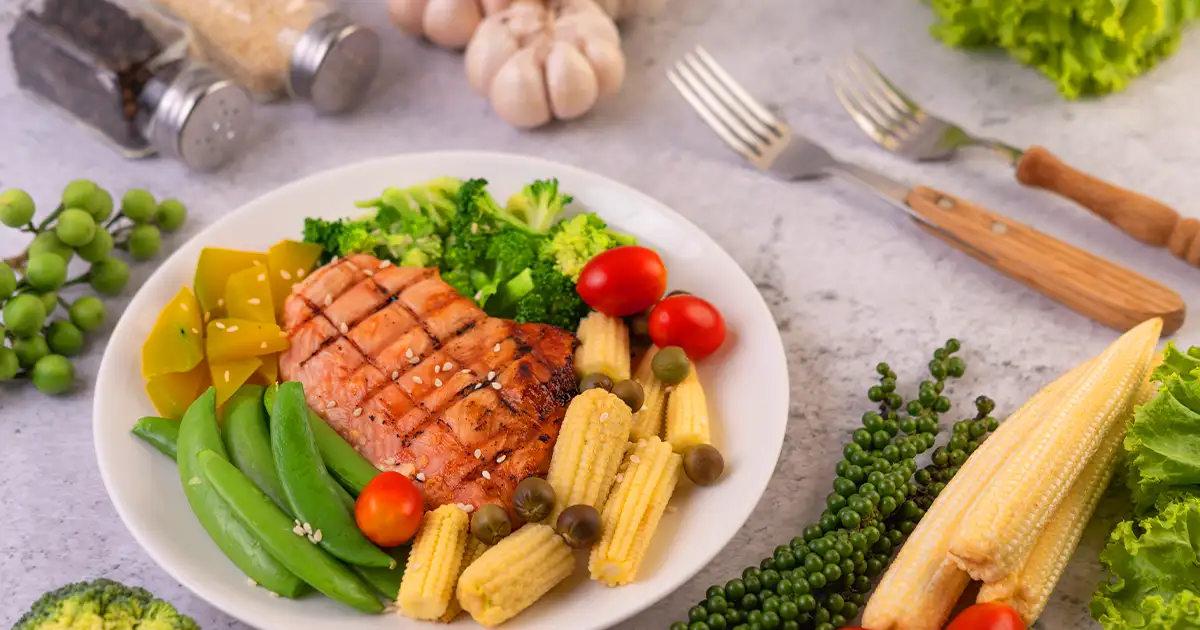
The PCOS-friendly plate is anti-inflammatory, fiber-rich, and built around foods that release glucose slowly. Build your meals around these:
Protein (lean, varied):
- Pasture-raised eggs
- Wild salmon and sardines
- Chicken, turkey, grass-fed beef
- Lentils, chickpeas, black beans
- Greek yogurt (unsweetened, full-fat)
Healthy fats:
- Avocado and avocado oil
- Olive oil (cold-pressed, extra virgin)
- Nuts and seeds (especially walnuts, almonds, flax, chia)
- Fatty fish (omega-3s reduce inflammation)
Complex carbs that don’t spike insulin:
- Sweet potatoes, butternut squash
- Quinoa, brown rice, steel-cut oats
- Berries (lowest sugar fruit option)
- Legumes (count as both protein and carbs)
Non-starchy vegetables (eat freely):
- Leafy greens (spinach, kale, arugula, romaine)
- Cruciferous vegetables (broccoli, cauliflower, Brussels sprouts, cabbage) — these help your liver clear excess hormones
- Zucchini, peppers, cucumber, tomatoes
- Mushrooms, asparagus, green beans
PCOS-specific powerhouses:
- Cinnamon — improves insulin sensitivity
- Spearmint tea — research suggests it lowers excess androgens
- Berberine-rich foods or supplements (with medical guidance)
- Inositol (myo-inositol, often supplemented for PCOS under doctor supervision)
Foods to Avoid (Or Significantly Reduce) With PCOS
Some foods directly worsen insulin resistance and inflammation, making every PCOS symptom harder to manage. The biggest offenders:
- Refined sugar — spikes insulin sharply, drives androgen production
- Refined flour — bread, pastries, white pasta act almost identically to sugar
- Sugary drinks — soda, juice, sweetened lattes, energy drinks
- Ultra-processed foods — chips, packaged snacks, most “diet” foods
- Industrial seed oils — soybean, corn, canola oil; drive inflammation
- Excessive caffeine — spikes cortisol, which worsens insulin resistance
- Alcohol — disrupts blood sugar and burdens the liver’s hormone-clearing function
This doesn’t mean perfection. It means making these foods occasional rather than daily. The 80/20 rule works well for most women with PCOS: 80% PCOS-aligned eating, 20% flexibility for real life.
Dairy is more individual. Some women with PCOS see significant improvements when they reduce or remove dairy (especially conventional milk), while others tolerate it fine. Worth experimenting for 4 weeks to see how your body responds.
Macro Balance for Insulin Sensitivity
The single most effective shift you can make: rebalance your macros so every meal contains protein, fat, and fiber-rich carbs in roughly these ratios:
- Protein: 25–30% of calories (around 30g per meal)
- Healthy fat: 35–40% of calories
- Carbs (low-glycemic): 30–40% of calories
This pattern keeps insulin steady, prevents the energy crashes that drive cravings, and supports the slow, sustainable fat loss most PCOS women need.
Practical numbers:
- Protein: 1.2–1.6g per kg of body weight daily
- Fat: 60–80g daily depending on overall calories
- Carbs: 100–150g daily, mostly from vegetables, legumes, and slow-release sources
The goal isn’t strict low-carb. Cutting carbs too aggressively can actually worsen PCOS by raising cortisol and disrupting thyroid function. Moderate, well-timed carbs work better than extremes.
If chronic fatigue is also part of your PCOS picture — and it usually is — the energy-hormone connection is explained more fully in our guide to hormone fatigue and afternoon energy crashes.
PCOS Meal Planning Strategy
The macros only work if you actually eat them — consistently. A few structural shifts that make a PCOS diet sustainable:
Eat within an hour of waking. Skipping breakfast spikes cortisol and worsens insulin response all day. Aim for 25–30g of protein in your first meal.
Don’t graze. Constant snacking keeps insulin elevated. Stick to 3 meals (or 3 meals + 1 small snack) with 3–4 hour gaps between them.
Pair every carb with protein and fat. Berries alone spike sugar; berries with Greek yogurt and walnuts barely move it. This simple rule changes everything.
Front-load carbs to earlier in the day. Your body handles carbs better in the morning and afternoon than at dinner. Build dinners around protein, healthy fats, and non-starchy vegetables.
Walk 10 minutes after meals. This single habit dramatically improves insulin sensitivity — research suggests post-meal walks lower glucose response by 12–22%.
Lift weights 2–3 times per week. Strength training is the most effective exercise for PCOS — it improves insulin sensitivity more than cardio and builds the muscle that helps clear glucose from the bloodstream.
The Solution: PCOS-Friendly Meal Plans, Already Built
Knowing what to eat with PCOS is one thing. Building a week of PCOS-aligned breakfasts, lunches, dinners, and snacks — every week, around real life — is where most women hit the wall.
The Happy Hormones 4-Week Meal Plan is structured around exactly the principles PCOS responds to: balanced macros at every meal, anti-inflammatory ingredients, low-glycemic carbs, and protein front-loaded earlier in the day. Every recipe supports insulin sensitivity and hormone balance, with the right portions and pairings already mapped out. No counting, no guessing, no spending Sundays meal-planning — just consistent, PCOS-friendly eating that turns the daily decisions into a system you can actually follow.
Frequently Asked Questions
What is the best diet for PCOS?
The best diet for PCOS is anti-inflammatory and built around stable blood sugar. That means lean protein at every meal, healthy fats (avocado, olive oil, fatty fish), high-fiber vegetables, low-glycemic carbs (sweet potato, quinoa, berries), and minimal refined sugar or processed foods. The Mediterranean diet and low-glycemic diet are both well-researched for PCOS. Avoid extreme low-carb approaches, which can raise cortisol.
What foods should I avoid with PCOS?
Foods that worsen PCOS include refined sugar, white flour products (bread, pasta, pastries), sugary drinks, ultra-processed snacks, industrial seed oils, and excessive caffeine. These all spike insulin or worsen inflammation. Some women with PCOS also benefit from reducing dairy, though tolerance varies. The goal isn’t perfection but consistency — 80/20 works well long-term.
How long does it take for a PCOS diet to work?
Most women with PCOS notice meaningful changes within 8–12 weeks of consistent, PCOS-aligned eating. Energy and cravings typically improve first (within 2–4 weeks), followed by better acne and skin (4–8 weeks), then regular periods returning (3–6 months), and sustained weight loss (6+ months). Patience and consistency matter more than perfection.
Can PCOS be reversed with diet?
PCOS cannot be fully cured, but its symptoms can be dramatically reduced — sometimes to the point of remission — with consistent nutrition, exercise, sleep, and stress management. Many women restore regular periods, fertility, and metabolic health through diet alone. Medical management (which may include metformin, inositol, or hormonal treatments) should be coordinated with your healthcare provider.
The Bottom Line
PCOS is one of the most diet-responsive hormone conditions there is. The right foods stabilize insulin, lower inflammation, calm androgens, and restore the cycle — often without medication. The Happy Hormones 4-Week Meal Plan turns the principles in this guide into an actual daily plan you can follow, with every meal already structured for PCOS-friendly eating.
Medical Disclaimer: This content is for informational and educational purposes only and is not a substitute for professional medical advice, diagnosis, or treatment. PCOS is a medical condition that requires proper diagnosis and management, including regular monitoring for related conditions such as type 2 diabetes, cardiovascular disease, and endometrial health. Treatment decisions — including medications like metformin, hormonal contraceptives, fertility medications, and supplements such as inositol — should always be made with a qualified healthcare provider. Nutritional changes should also be discussed with your doctor, especially if you have diabetes, take medications, are pregnant, or are trying to conceive. Individual results may vary.