
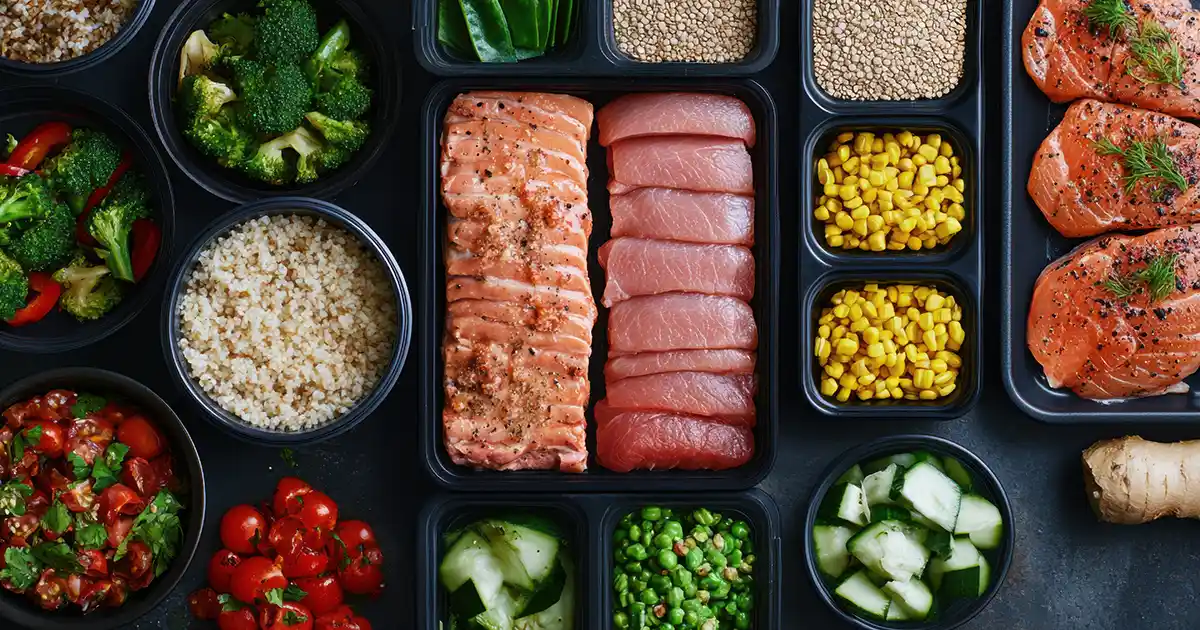
If you’ve spent any time in fitness circles or scrolled through nutrition content online, you’ve probably heard people talk about “hitting their macros.” But what are macros, really? In simple terms, macros are the three nutrients your body needs in large amounts every single day to fuel everything from your morning workout to your late-night thinking sessions: protein, carbohydrates, and fats. This guide breaks down the macronutrients definition, shows you exactly how to count macros without losing your mind, and walks you through the macros percentage for weight loss that actually works. Whether you’re brand new to tracking or you’ve tried (and quit) before, you’ll leave with a clear plan you can start using today.
What Are Macros? The Macronutrients Definition
Macros, short for macronutrients, are the three energy-providing nutrients your body requires in larger quantities than any other: protein, carbohydrates, and fat. Each one delivers calories (energy) and plays a unique role in keeping you alive, building muscle, supporting brain function, and regulating hormones.
According to the National Institutes of Health, adults need all three macronutrients in specific ranges to maintain optimal health. The Acceptable Macronutrient Distribution Ranges (AMDRs) set by the Institute of Medicine are:
| Macronutrient | Calories per Gram | Daily Range (% of Calories) |
|---|---|---|
| Protein | 4 | 10–35% |
| Carbohydrates | 4 | 45–65% |
| Fat | 9 | 20–35% |
Notice that fat packs more than twice the calories per gram compared to protein and carbs. That’s why a small drizzle of olive oil or a handful of nuts adds up faster than you might think.
The opposite of macronutrients is micronutrients, which are vitamins and minerals you need in much smaller amounts. Both matter, but macros are what determine whether you gain, lose, or maintain weight on a given day. To see exactly how many grams of each macro you need, try our free Macro Calculator for a personalized breakdown.
The Three Macronutrients Explained
Before you can count macros, you need to understand what each one actually does. Here’s a closer look at the trio.
Protein: The Building Block
Protein is responsible for building and repairing tissue, including muscle, skin, organs, and even enzymes that run thousands of chemical reactions inside you. The Harvard T.H. Chan School of Public Health recommends that most active adults aim for 0.6 to 1.0 gram of protein per pound of body weight, especially when trying to lose fat or build muscle.
Best protein sources:
- Chicken breast, turkey, lean beef
- Fish (salmon, tuna, cod)
- Eggs and egg whites
- Greek yogurt and cottage cheese
- Tofu, tempeh, lentils, beans
- Whey or plant-based protein powder
Protein is also the most filling of the three macros, which is why higher-protein diets tend to make weight loss feel less miserable.
Carbohydrates: Your Body’s Preferred Fuel
Carbs are your body’s go-to energy source, especially during workouts and high-intensity activity. They break down into glucose, which fuels your brain and muscles. Despite what low-carb hype might suggest, carbs aren’t the enemy — the type and amount matter far more than the label.
Smart carb sources:
- Oats, brown rice, quinoa, whole-grain bread
- Sweet potatoes, regular potatoes, squash
- Fruits and vegetables of all kinds
- Beans, lentils, chickpeas
Refined carbs (white bread, sugary cereal, soda) spike blood sugar and leave you hungry an hour later. Whole-food carbs keep you steady and well-fed.
Fat: The Hormone Helper
Fat got an unfair reputation in the 1990s, but it’s now well established that healthy fats are essential for hormone production, brain health, and absorbing fat-soluble vitamins (A, D, E, and K). The American Heart Association recommends focusing on unsaturated fats while limiting saturated and trans fats.
Fats to prioritize:
- Avocado, olive oil, olives
- Nuts and seeds (almonds, walnuts, chia, flax)
- Fatty fish (salmon, sardines, mackerel)
- Nut butters without added sugar
Going too low on fat can mess with your hormones, energy, and mood. Most people do best with at least 0.3 grams of fat per pound of body weight.
What Are Macros in a Diet? Why People Track Them
So what are macros in a diet context? Tracking macros (sometimes called “flexible dieting” or “If It Fits Your Macros” / IIFYM) means setting daily targets for grams of protein, carbs, and fat — then logging your food to hit those numbers. Unlike rigid meal plans that tell you exactly what to eat, macro tracking gives you freedom to choose any food, as long as it fits your daily totals.
People track macros for several reasons:
- Fat loss without starvation — by keeping protein high, you preserve muscle while losing weight.
- Muscle gain — eating enough protein and total calories is the only way to build muscle effectively.
- Athletic performance — endurance athletes time their carbs around training for better output.
- Body recomposition — losing fat and gaining muscle at the same time requires precise macro targets.
- Better food awareness — most people drastically underestimate what they eat. Tracking fixes that fast.
A 2014 study in the Journal of the International Society of Sports Nutrition confirmed that protein intake and total calories are the two most important factors for body composition changes — exactly what macro tracking addresses.
If you’re not sure whether your current weight is in a healthy range first, it can help to check your starting point. Use the BMI Calculator to get an initial reading before diving into macro tracking.
How Do You Count Macros? A Step-by-Step Guide
Counting macros sounds intimidating until you actually do it. Here’s the straightforward process.
Step 1: Calculate Your Daily Calorie Needs
Before you can split calories into macros, you need to know your total daily calorie target. This depends on your age, sex, weight, height, and activity level. The simplest approach is to find your Total Daily Energy Expenditure (TDEE), then adjust it based on your goal:
- Fat loss: subtract 15–25% from your TDEE
- Maintenance: stay at your TDEE
- Muscle gain: add 5–15% to your TDEE
Our Calorie Calculator does this math for you in seconds.
Step 2: Set Your Protein Target
Protein comes first because it’s the most important for body composition. A solid starting point is 0.7 to 1.0 gram of protein per pound of bodyweight for active adults. Someone who weighs 160 pounds would aim for roughly 112 to 160 grams of protein daily.
Step 3: Set Your Fat Target
Fat should make up at least 20% of your daily calories, with 25–30% being a comfortable middle ground for most people. To calculate grams of fat: multiply your total calories by 0.25, then divide by 9.
Example: 2,000 calories × 0.25 = 500 calories from fat ÷ 9 = about 56 grams of fat per day.
Step 4: Fill the Rest with Carbs
Whatever calories are left after protein and fat go to carbs. Each gram of carb is 4 calories.
Example calculation for a 2,000-calorie day:
- Protein: 150g × 4 = 600 calories
- Fat: 56g × 9 = 504 calories
- Carbs remaining: 2,000 − 1,104 = 896 calories ÷ 4 = 224g of carbs
Step 5: Track What You Eat
Use a food tracking app like MyFitnessPal, Cronometer, or MacroFactor. Weigh foods on a kitchen scale when possible — eyeballing portions is the number-one reason people stall. Log everything for at least the first month, including cooking oils, sauces, and that handful of almonds you grabbed at 3 p.m.
Step 6: Adjust Weekly
Weigh yourself daily and average the numbers over a week. If you’re not losing fat after two weeks (assuming that’s your goal), reduce calories by 100–150 per day, mostly from carbs or fat. If you’re losing too fast (more than 1% of body weight per week), bump calories up.
For protein-specific guidance, our Protein Intake Calculator shows exactly how much you need based on your weight and activity level.
Counting Macros for Weight Loss: What Actually Works
Counting macros for weight loss works because it solves the two biggest problems with traditional diets: undereating protein and underestimating calories. Here’s how to set yourself up for results that stick.
Create the Right Calorie Deficit
A deficit of 300–500 calories per day produces sustainable fat loss of about 0.5 to 1 pound per week. Going much lower than that crashes your energy, kills your workouts, and usually leads to a binge by the weekend. The Mayo Clinic confirms that slow, steady fat loss is far more sustainable than crash dieting.
Prioritize Protein Above All Else
When you’re in a calorie deficit, your body will break down both fat and muscle for energy unless you give it a reason not to. High protein intake (around 1 gram per pound of bodyweight) tells your body to spare muscle and burn fat instead. Higher protein also keeps hunger lower, which is the silent killer of most diets.
Eat Mostly Whole Foods
Macros count, but food quality matters too. A 200-calorie serving of grilled chicken and broccoli will fill you up far more than 200 calories of cookies, even though the macros might technically fit. Aim for 80–90% whole-food choices and use the remaining 10–20% for foods you genuinely enjoy.
Be Patient With the Scale
Body weight fluctuates by 2–5 pounds in a single day from water, sodium, glycogen, and digestion. Track weekly averages, not daily numbers, and judge progress over 3–4 weeks instead of days.
Macros Percentage for Weight Loss: The Best Splits
The best macros percentage for weight loss isn’t one-size-fits-all, but research consistently supports a higher-protein approach for fat loss. Below are the most evidence-backed splits, depending on your activity level and food preferences.
Standard Balanced Split (40/30/30)
- Carbs: 40%
- Protein: 30%
- Fat: 30%
This is the classic flexible dieting split. It works well for most active adults who exercise 3–5 times per week and don’t have strong preferences for either lower-carb or higher-carb eating.
Higher Protein for Fat Loss (40/40/20)
- Carbs: 40%
- Protein: 40%
- Fat: 20%
When you’re trying to lose fat while preserving muscle, increasing protein to 40% of calories often produces the best results. This split is especially useful if you lift weights regularly and want to keep (or build) muscle while cutting.
Lower Carb for Insulin Sensitivity (30/35/35)
- Carbs: 30%
- Protein: 35%
- Fat: 35%
People with insulin resistance, prediabetes, or PCOS often respond well to a moderately lower-carb split. According to the American Diabetes Association, reducing refined carbs and increasing protein can improve blood sugar control during fat loss.
Quick Reference Table
| Goal | Carbs | Protein | Fat |
|---|---|---|---|
| General fat loss | 40% | 30% | 30% |
| Fat loss + muscle preservation | 40% | 40% | 20% |
| Lower-carb fat loss | 30% | 35% | 35% |
| Maintenance | 50% | 25% | 25% |
| Muscle gain | 50% | 25% | 25% |
The most accurate macros percentage for weight loss is the one you can actually stick to for months. Pick the split that fits your food preferences and lifestyle, then adjust based on how your body responds.
Know the Limits — When Macro Counting May Not Be Right for You
Counting macros is powerful, but it isn’t right for everyone. Here are situations where you should pause or work with a professional before tracking.
Skip or modify macro tracking if:
- You have a history of disordered eating, including anorexia, bulimia, or orthorexia. Tracking can trigger unhealthy patterns.
- You’re pregnant or breastfeeding. Nutritional needs are different and should be guided by your healthcare provider.
- You’re under 18. Growing bodies need flexibility, not rigid numbers.
- You’re recovering from significant illness or surgery. Focus on healing first.
- You have a medical condition like kidney disease that requires specific protein limits.
For most healthy adults, macro counting is a tool, not a sentence. You don’t have to track forever — many people use it for 8–12 weeks to learn portion sizes, then transition to intuitive eating with that knowledge in their back pocket.
If tracking starts to feel obsessive or stressful, take a break. The goal is health, not perfection.
Frequently Asked Questions About Macros
What are macros in simple terms?
Macros are the three nutrients your body needs in large amounts — protein, carbohydrates, and fat — that provide all your daily calories and energy. Each gram of protein and carbs gives you 4 calories, while each gram of fat gives 9 calories. Tracking the grams of each macro you eat is the most accurate way to control your weight and body composition. Use our Macro Calculator to find your personal targets in under a minute.
How do you count macros for beginners?
To count macros as a beginner, calculate your daily calorie target, set protein at about 1 gram per pound of bodyweight, set fat at 25% of total calories, and fill the rest with carbs. Then download a food tracking app like MyFitnessPal or Cronometer, weigh your food, and log everything for at least 4 weeks. Consistency matters far more than getting every gram exactly right.
What is the best macro split for losing weight?
The best macro split for losing weight for most people is 40% carbs, 40% protein, and 20% fat, paired with a 300–500 calorie daily deficit. This higher-protein approach preserves muscle while you lose fat and keeps hunger lower. People with insulin resistance may do better with a lower-carb 30/35/35 split, but the calorie deficit is what actually drives fat loss.
Do macros matter more than calories for weight loss?
Calories matter most for total weight change, but macros determine the type of weight you lose. Two diets with identical calories can produce very different body composition results — a high-protein diet preserves muscle and burns fat, while a low-protein diet often loses both. So calories control the scale, but macros control whether you look toned or “skinny fat” at the end.
How long should I count macros?
Most people benefit from counting macros for 8–16 weeks to learn portion sizes, build food awareness, and reach a body composition goal. After that, you can transition to a more flexible approach using the eyeballing skills you developed. Some athletes and physique competitors track year-round, but for general health and weight management, ongoing strict tracking isn’t necessary.
Can I count macros without weighing food?
You can estimate macros without a food scale, but accuracy drops significantly — research shows people underestimate their intake by 20–40% on average when eyeballing. If you’re not seeing results, a food scale is the single most important tool to add. For accurate hydration tracking alongside your macros, try our Water Intake Calculator.
Related Content
Macro Calculator: Find Your Daily Protein, Carb & Fat Targets Nutrition | Get a personalized macro breakdown based on your goal, weight, and activity level — free and instant. Read More →
Calorie Calculator: How Many Calories Do You Really Need? Fitness | Calculate your TDEE and set the right calorie target for fat loss, maintenance, or muscle gain. Read More →
Protein Intake Calculator: How Much Protein Per Day? Nutrition | Find out exactly how much protein you need based on your weight, age, and training style. Read More →
BMI Calculator: Check Your Healthy Weight Range Fitness | A free tool to assess your weight status and set realistic body composition goals. Read More →
Conclusion
Now that you know what macros are — protein, carbs, and fat — and how counting them gives you precise control over your body composition, the next step is actually putting it into practice. Start with your calorie target, set your protein at around 1 gram per pound of bodyweight, fill in fat and carbs, and track for at least four weeks before judging results. Don’t aim for perfection; aim for consistency. Ready to find your exact numbers? Calculate your personal targets with our free Macro Calculator and get started today.
Medical Disclaimer: This content is for informational and educational purposes only. It is not intended as medical advice, diagnosis, or treatment. Always consult a qualified healthcare provider before making changes to your diet, exercise routine, or health regimen. Individual results may vary. WellCal’s calculators and content are screening tools, not diagnostic instruments. Macro tracking is not recommended for individuals with a history of disordered eating without professional guidance.