
Pregnancy
When Does Ectopic Pregnancy Pain Start? A Complete Guide to Symptoms, Risks & Treatment
⚕ Medical Disclaimer: This article is for informational purposes only and does not constitute medical advice, diagnosis, or treatment. Always

Fat-Free Mass Index – measure your lean muscle mass
* For women, subtract 2–3 points from these values
An FFMI calculator measures your Fat-Free Mass Index. It uses your weight, height, and body fat percentage to show how much lean muscle you carry relative to your stature. This gives athletes and fitness enthusiasts a far more meaningful metric than BMI alone.
The FFMI formula was established in a landmark 1995 study by Kouri, Pope, Katz, and Oliva published in the Clinical Journal of Sport Medicine. That research confirmed FFMI as a reliable tool for classifying natural muscle development. It remains the most cited framework for natural genetic muscle potential in sports science today.
The metric formula has two steps. First: Lean Body Mass (kg) = Total Weight × (1 − Body Fat %). Then: FFMI = Lean Body Mass ÷ Height (m)².
A normalized version adjusts for height: Normalized FFMI = FFMI + 6.1 × (1.8 − Height in meters). This makes comparisons fair across people of different statures. Your result then places you in one of six muscularity categories, each with a distinct fitness implication.
After you calculate your FFMI, your next step is dialling in your nutrition. Use WellCal's Protein Intake Calculator to set your muscle-building target. You can also use the Calorie Calculator to find your TDEE and the Macro Calculator to plan your full nutrition split.
Use this table to interpret your normalized FFMI result. Ranges apply to adult men. Women's scores are typically 2–4 points lower at equivalent fitness levels due to natural hormonal differences.
| Normalized FFMI (Men) | Normalized FFMI (Women) | Category | What It Means |
|---|---|---|---|
| Below 17.0 | Below 14.0 | Below Average | Low lean mass relative to height. A structured strength training programme and adequate protein intake will drive meaningful improvement. |
| 17.0 – 18.0 | 14.0 – 16.0 | Average | Typical of a non-training adult with a moderately active lifestyle. Consistent resistance training can move you into the above-average range within 12 months. |
| 18.0 – 20.0 | 16.0 – 17.5 | Above Average | Visible muscle development is evident. Consistent training and solid nutrition habits are clearly paying off. |
| 20.0 – 22.0 | 17.5 – 19.0 | Excellent | A strong, lean physique most gym-goers aspire to reach. Achieving this requires years of progressive overload and disciplined nutrition. |
| 22.0 – 25.0 | 19.0 – 21.0 | Elite Natural | Top-tier natural development. Exceptional genetics combined with long-term, high-quality training and nutrition are required to reach this range. |
| Above 25.0 | Above 21.0 | Beyond Natural Limit | Exceeds the threshold Kouri et al. identified for confirmed natural athletes. Values in this range are statistically rare among drug-free individuals. |
Source: Kouri EM, Pope HG Jr, Katz DL, Oliva P. Fat-free mass index in users and nonusers of anabolic-androgenic steroids. Clin J Sport Med. 1995;5(4):223–228.
Both metrics serve a purpose. Understanding the difference helps you choose the right tool for your specific health or fitness goal.
| Feature | FFMI (Fat-Free Mass Index) | BMI (Body Mass Index) |
|---|---|---|
| What it measures | Lean muscle mass relative to height | Total body weight relative to height |
| Inputs required | Weight, height, body fat % | Weight and height only |
| Useful for athletes | ✓ Yes — muscle and fat are separated | ✗ No — muscle causes false overweight results |
| Tracks muscle gain | ✓ Directly and accurately | ✗ Cannot isolate muscle from fat gain |
| Natural ceiling concept | ✓ Established by peer-reviewed research | ✗ No equivalent concept for muscle mass |
| General population screening | ✗ Requires a body fat reading | ✓ Simple, fast, and universally applicable |
| Endorsed by | Kouri et al. (1995), sports science literature | CDC, WHO, NHLBI, Mayo Clinic |
| Best use case | Athletes, bodybuilders, physique tracking | Population-level weight-risk screening |
Use FFMI if you train regularly and want an accurate picture of your muscle development. Use WellCal's BMI Calculator for general weight-risk screening. Together, both metrics give you the most complete health picture available from simple body measurements.
Your FFMI is a starting point for action, not just a number to log. Here is what each result means and how to act on it using WellCal's free tools.
Your FFMI gives you an objective benchmark to track genuine muscle growth over time — not just total weight gain. Because lean muscle growth is slow (0.5–2 kg per month for beginners), monthly FFMI tracking reveals real progress that weekly weigh-ins obscure. It is the most honest measure of whether your training programme is producing results.
Pair your FFMI with WellCal's BMI Calculator for a complete body composition picture. Together, they show both your total weight health risk and your specific muscle development level. No single metric tells the full story alone.
One of FFMI's most practical uses is setting a realistic long-term muscle-building goal. Research by Kouri et al. established that most natural men plateau around an FFMI of 22–24, with a hard ceiling near 25 for exceptional genetics. Knowing your ceiling helps you set ambitious but achievable targets.
This also protects you from chasing physiques that require pharmaceutical assistance. Understanding your natural potential is empowering, not limiting. It shifts your focus to optimising training, nutrition, and recovery — the three variables entirely within your control.
A higher FFMI means more metabolically active tissue — and a higher calorie requirement at rest. Once you know your lean body mass from your FFMI calculation, your calorie target becomes far more precise. Use WellCal's free Calorie Calculator to determine your exact Total Daily Energy Expenditure (TDEE).
This ensures you eat enough to support muscle retention during a cutting phase. It also confirms you are in an appropriate surplus for muscle growth during a bulk. Calorie precision based on lean mass is more effective than generic formulas based on total body weight.
Serious athletes base their protein targets on lean body mass rather than total weight. This produces a more accurate and higher target than general population guidelines. The Journal of the International Society of Sports Nutrition recommends 1.6–2.2 g of protein per kg of lean body mass to maximise muscle protein synthesis.
Your FFMI calculation already gives you your lean body mass figure. Feed that directly into WellCal's Protein Intake Calculator for a personalised daily target. It also shows per-meal protein goals so you can distribute your intake evenly throughout the day.
Your FFMI tells you where you currently sit on the muscle development spectrum. That position should directly inform your macro split. A higher FFMI in a cutting phase demands more protein to preserve lean mass. A lower FFMI in a building phase justifies a moderate calorie surplus with a growth-oriented macro split.
Use WellCal's Macro Calculator to tailor your protein, carbohydrate, and fat ratio to your exact goal. Research in the Journal of the International Society of Sports Nutrition confirms that tracking macronutrients produces better body composition results than counting calories alone. Your FFMI gives you the context to make those macro decisions precisely.
Even mild dehydration of 1–2% of body weight measurably reduces strength output and training volume. Both of those variables directly limit long-term FFMI progression. Muscle tissue is approximately 79% water, making hydration a foundational pillar of any serious training programme.
The National Academies of Sciences recommends around 3.7L daily for men and 2.7L for women. Use WellCal's Water Intake Calculator to get your exact personalised target. It adjusts for your body weight, activity level, and climate.
Muscle is built during sleep, not during training. Sleep deprivation sharply reduces muscle protein synthesis, raises cortisol, and suppresses anabolic hormones including testosterone and growth hormone. According to the National Sleep Foundation, adults need 7–9 hours of quality sleep per night for full physiological recovery.
If your FFMI has stalled despite consistent training and good nutrition, suboptimal sleep may be the missing variable. Use WellCal's Sleep Calculator to find your ideal bedtime. It aligns your sleep schedule with your natural 90-minute REM cycles so you wake fully recovered, not groggy.
Higher lean muscle mass is independently associated with lower cardiovascular disease risk, improved insulin sensitivity, and better long-term metabolic health. Research cited by the American Heart Association confirms that resistance training — the primary driver of FFMI improvement — significantly reduces all-cause mortality risk.
So tracking your FFMI is not just a vanity metric — it is a genuine health indicator. For a complete cardiovascular risk picture alongside your muscle data, use WellCal's Cholesterol Ratio Calculator. Together, lean mass and cholesterol data give you the most actionable snapshot of your long-term health.
FFMI is the most useful body composition metric for athletes. However, understanding its limitations helps you interpret results correctly and avoid common mistakes.
For natural male athletes, a normalized FFMI of 20–22 is considered very good. A score of 22–25 is elite. Research by Kouri et al. (1995) in the Clinical Journal of Sport Medicine found that steroid-free athletes rarely exceed a normalized FFMI of 25.
For women, a natural FFMI above 17–19 is considered excellent. Reaching the upper end of any of these ranges requires years of consistent, progressive training. Optimal protein intake and recovery are equally essential.
The formula has two steps. First, calculate your lean body mass: LBM (kg) = Total Weight × (1 − Body Fat %). Then divide by height squared: FFMI = LBM ÷ Height² (m²).
A normalized version adjusts for height: Normalized FFMI = FFMI + 6.1 × (1.8 − Height in meters). This makes comparisons fair across people of different statures. For example, a 6'4" athlete naturally carries more absolute lean mass than a 5'7" athlete — normalization accounts for this.
Yes — significantly so. FFMI separates lean muscle mass from fat mass. This makes it far more meaningful for anyone with above-average muscle development. BMI groups muscle and fat together, which causes muscular individuals to score as "overweight" despite having low body fat.
For example, a competitive natural bodybuilder at 90 kg and 10% body fat would score a BMI of 27 (overweight). Their FFMI, however, would be approximately 23 — elite natural territory. Use WellCal's BMI Calculator alongside FFMI for the most complete picture.
You need a reasonable estimate of your body fat percentage. The most accurate methods are a DEXA scan (±1–2%), underwater hydrostatic weighing (±1–2%), and Air Displacement Plethysmography or Bod Pod (±2–3%). Skinfold calipers with a trained operator give ±3–4% accuracy.
Consumer bioelectrical impedance scales are the least accurate at ±3–8%. However, even an estimate within 3–4% gives a useful FFMI figure for progress tracking. The more accurate your body fat reading, the more reliable and actionable your FFMI result will be.
Rarely, but it is possible. The Kouri et al. (1995) study found that FFMI values above 25 were statistically very uncommon among confirmed natural athletes. A small number of individuals with exceptional genetics may genuinely reach 25–26. Values consistently above 26 are considered strong indicators of anabolic steroid use in the published literature.
It is important to note that the original sample was limited in size and diversity. Later analysis suggests the ceiling may be slightly higher for some individuals. As a general guideline, 25 remains the most widely accepted natural threshold in sports science.
BMI uses total body weight divided by height squared. It cannot distinguish muscle from fat and was designed as a population-level screening tool. FFMI uses lean body mass only — fat subtracted out — divided by height squared. This makes it a direct and specific measure of muscularity.
BMI is endorsed by the CDC, WHO, and NHLBI for general weight-risk screening. FFMI is used in sports science and fitness for physique tracking and goal setting. For best results, use both metrics together alongside WellCal's Calorie Calculator and Protein Calculator.
The formula is identical for women, but the interpretation scale differs. Women naturally carry less lean mass and more essential body fat due to hormonal differences. An FFMI of 14–16 is average for adult women. A score of 16–17.5 is above average, and 17.5–19 is excellent.
An FFMI above 19–21 is elite for natural female athletes. These ranges reflect real-world data from women competing in drug-tested strength and physique federations. Use WellCal's Protein Intake Calculator to support lean muscle development at any level.
First, do not be discouraged — a below-average FFMI simply identifies a clear opportunity for improvement. Start with a structured resistance training programme focused on progressive overload. Then use WellCal's Protein Intake Calculator to ensure you are eating enough protein to support muscle growth.
Next, use the Calorie Calculator to confirm you are eating at a slight surplus for muscle building. Consistency over 6–12 months will produce significant and measurable FFMI improvements. Visit WellCal's Health Tips for guidance on building sustainable training and nutrition habits.
Monthly tracking is ideal for most people actively building muscle. Since genuine lean muscle growth is slow — typically 0.5–2 kg per month for beginners and far less for advanced trainees — weekly readings are too small to be meaningful. Monthly tracking gives you a clearer picture of real progress.
Always measure under the same conditions: same time of day, same hydration state, and the same body fat measurement method. This consistency removes noise and makes your monthly FFMI comparisons genuinely useful. Visit WellCal's Health Tips for guidance on building a sustainable tracking routine.
⚕ Medical Disclaimer: This article is for informational purposes only and does not constitute medical advice, diagnosis, or treatment. Always

Knowing how to calculate your macros for weight loss is one of the most powerful steps anyone can take on
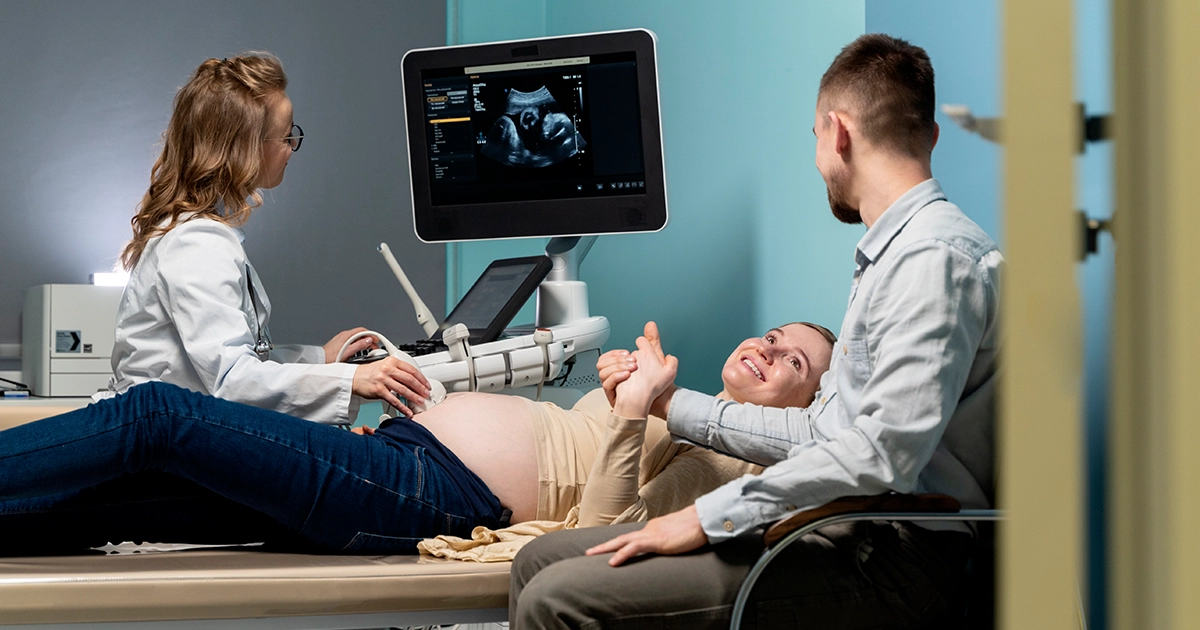
Do you know how many ultrasounds during pregnancy are required?For most expectant parents, few moments in a pregnancy journey are

A high-protein liquid diet is a short-term eating plan where all meals come from liquids that are rich in protein.

A liquid diet replaces some or all solid foods with liquids for a short period. Many people try liquid diets

Fiber is an essential nutrient that plays a crucial role in maintaining digestive health, regulating blood sugar levels, and supporting