
Pregnancy
When Does Ectopic Pregnancy Pain Start? A Complete Guide to Symptoms, Risks & Treatment
⚕ Medical Disclaimer: This article is for informational purposes only and does not constitute medical advice, diagnosis, or treatment. Always

Estimate your due date and track pregnancy progress
A pregnancy due date calculator estimates the most likely date your baby will be born — formally known as the estimated due date (EDD) or expected date of delivery (EDD). It is based on the clinical assumption that a typical pregnancy lasts 40 weeks (280 days) from the first day of your last menstrual period (LMP). This standard is endorsed by the American College of Obstetricians and Gynecologists (ACOG), the NHS, and the World Health Organization (WHO) as the foundation for antenatal care planning worldwide.
The underlying method is Naegele's rule, named after German obstetrician Franz Karl Naegele. The formula is straightforward: EDD = First Day of LMP + 280 days. In practice, this is often applied as: subtract 3 months from your LMP date, then add 7 days and 1 year. WellCal's calculator also applies a cycle-length adjustment: because Naegele's rule assumes a 28-day cycle with ovulation on day 14, entering your actual average cycle length shifts the EDD accordingly — adding or subtracting days to account for earlier or later ovulation. This adjustment is recommended by both the Mayo Clinic and ACOG for women with cycles that differ significantly from 28 days.
Once you have your estimated due date, WellCal offers a suite of complementary tools to support your health throughout pregnancy. You may want to use our Calorie Calculator to understand your increased energy needs, our Water Intake Calculator to stay well-hydrated during each trimester, and our Ovulation Calculator if you are still in the conception phase or planning a future pregnancy. These tools work together to help you maintain the best possible health foundation before, during, and after pregnancy.
| Term | Gestational Age |
|---|---|
| Preterm | Before 37 weeks 0 days |
| Early Term | 37 weeks 0 days – 38 weeks 6 days |
| Full Term | 39 weeks 0 days – 40 weeks 6 days |
| Late Term | 41 weeks 0 days – 41 weeks 6 days |
| Post-Term | 42 weeks 0 days and beyond |
Your estimated due date is only as accurate as the inputs behind it. Understanding the factors that influence gestational age dating helps you interpret your result with the right level of confidence — and know when to seek ultrasound confirmation.
The first day of your last menstrual period is the foundational input in Naegele's rule and the universal starting point used by midwives and obstetricians globally. Because conception typically occurs about two weeks after this date, gestational age technically counts from before fertilisation occurred — a convention that can initially seem counterintuitive. According to ACOG guidelines, LMP-based dating is the accepted standard when the date is reliably known. To complement your due date estimate, our Ovulation Calculator can help you identify your fertile window and cross-reference your likely conception date.
Standard Naegele's rule assumes a 28-day cycle, but the average cycle length among reproductive-age women ranges from 21 to 35 days, with ovulation shifting proportionally. A woman with a 35-day cycle ovulates approximately 7 days later than the 28-day model predicts, shifting her true EDD forward by 7 days. Conversely, a 21-day cycle pushes the EDD 7 days earlier. Entering your actual average cycle length into WellCal's calculator applies this adjustment automatically. For conception planning, our Ovulation Calculator can help you track your cycle and identify peak fertility days with greater precision.
An ultrasound performed between 10 and 13 weeks gestation — measuring the crown-rump length (CRL) of the embryo — is the most accurate method of establishing gestational age, with a margin of error of just ±5 to 7 days. The NHS recommends a dating scan between 8 and 14 weeks for all pregnancies, and ACOG advises that ultrasound findings in the first trimester should take precedence over LMP-based calculations when they differ by more than 7 days. If your ultrasound EDD differs from this calculator's result, follow the ultrasound date — it reflects measured foetal development rather than assumed cycle timing.
Conception can only occur within a narrow fertile window — typically the 12–24 hours following ovulation, though sperm can survive in the reproductive tract for up to 5 days prior. If you know your precise ovulation date from LH surge testing or basal body temperature tracking, this provides a more direct route to your EDD: simply add 266 days (38 weeks) to your confirmed ovulation date. Research from the NIH's National Institute of Child Health confirms that ovulation-date-based calculation is at least as accurate as LMP-based Naegele's rule when ovulation timing is precisely known. Pair this insight with our Ovulation Calculator for a more precise estimate.
For pregnancies achieved through in vitro fertilisation (IVF), due date calculation bypasses LMP entirely and uses the embryo transfer date as the reference point, since conception timing is precisely documented. For a day-5 blastocyst transfer, the EDD is 261 days from the transfer date; for a day-3 embryo transfer, it is 263 days. According to the American Society for Reproductive Medicine (ASRM), IVF pregnancies carry a higher rate of multiples and should always be monitored by a reproductive endocrinologist. If you are tracking related health goals after IVF, our BMI Calculator can help you establish a pre-pregnancy or inter-pregnancy health baseline.
Women with polycystic ovary syndrome (PCOS), thyroid disorders, or other hormonal conditions often have menstrual cycles that vary by more than 7 days from month to month, making LMP-based due date calculation significantly less reliable. Approximately 14–25% of reproductive-age women experience irregular cycles, according to data from the CDC. For these women, an early dating ultrasound is the recommended method for establishing gestational age — the LMP result should be treated as a rough estimate only. Monitoring hormonal health is also important; our Diabetes Risk Calculator can be a useful tool, as insulin resistance is strongly associated with cycle irregularity and PCOS.
While your EDD is a fixed calculation, maternal nutritional status and overall health can influence the likelihood of preterm or post-term delivery. Deficiencies in folate, vitamin D, and omega-3 fatty acids have been associated with elevated preterm birth risk, according to research published in The Lancet. Meeting pregnancy's increased caloric demands — typically an additional 300–500 kcal/day in the second and third trimesters — supports healthy foetal growth and full-term delivery. Use our Calorie Calculator to estimate your pregnancy energy requirements, and our Protein Calculator to ensure adequate intake for foetal tissue development.
Adequate fluid intake is essential throughout pregnancy to support amniotic fluid levels, foetal circulation, and the prevention of urinary tract infections — which are significantly more common during pregnancy and can trigger preterm labour if untreated. The National Academies of Sciences, Engineering, and Medicine recommend approximately 3 litres (10 cups) of total daily water intake for pregnant women, compared to 2.7 litres for non-pregnant adults. Blood volume increases by up to 50% during pregnancy, further elevating fluid needs. Our Water Intake Calculator can help you set a personalised daily hydration target to support both your health and your baby's development.
Your estimated due date is a powerful planning tool — but it has real clinical limitations. Understanding what this calculator cannot reveal helps you use it effectively and know when professional assessment is essential.
Your estimated due date gives you a timeline — these tools help you build the healthy habits and nutritional foundation that support both you and your baby throughout every trimester.
⚕ Medical Disclaimer: This article is for informational purposes only and does not constitute medical advice, diagnosis, or treatment. Always

Knowing how to calculate your macros for weight loss is one of the most powerful steps anyone can take on
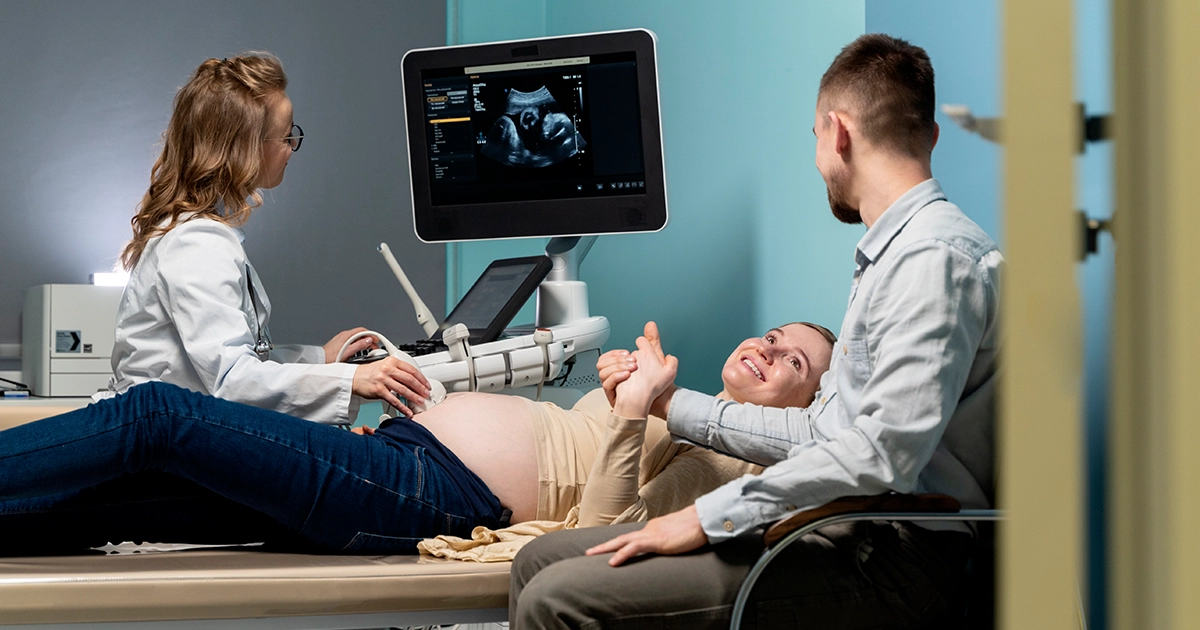
Do you know how many ultrasounds during pregnancy are required?For most expectant parents, few moments in a pregnancy journey are

A high-protein liquid diet is a short-term eating plan where all meals come from liquids that are rich in protein.

A liquid diet replaces some or all solid foods with liquids for a short period. Many people try liquid diets

Fiber is an essential nutrient that plays a crucial role in maintaining digestive health, regulating blood sugar levels, and supporting