
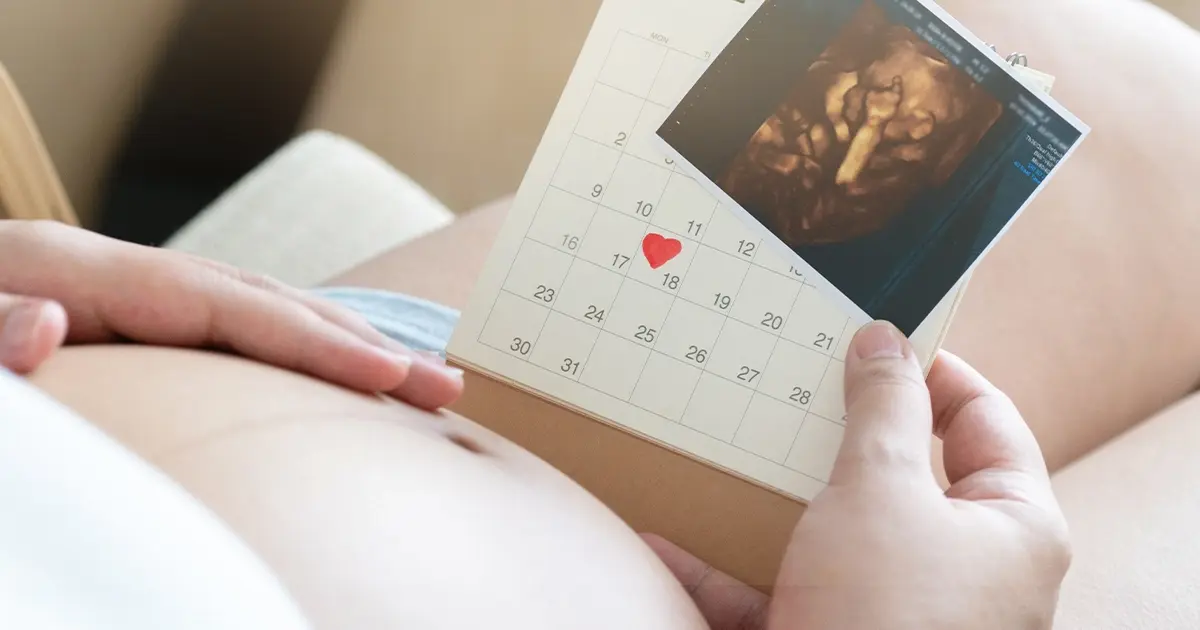
Pregnancy due dates feel like a magical milestone during the journey to parenthood. You enter a date, hit calculate, and suddenly the countdown to meeting your baby begins. But here’s the truth: most babies don’t arrive exactly on their due date — and there are several important reasons why. In fact, only about 4–5% of babies are born on their predicted due date, and many are born a week or more before or after. (Wikipedia)
If you’ve ever wondered why those dates seem to shift or feel “off,” you’re not alone — let’s break down the factors that affect due date accuracy and what you can expect.
Try your own accurate pregnancy due date with this tool:
Pregnancy Due Date Calculator — https://www.mywellcal.com/pregnancy-due-date-calculator/
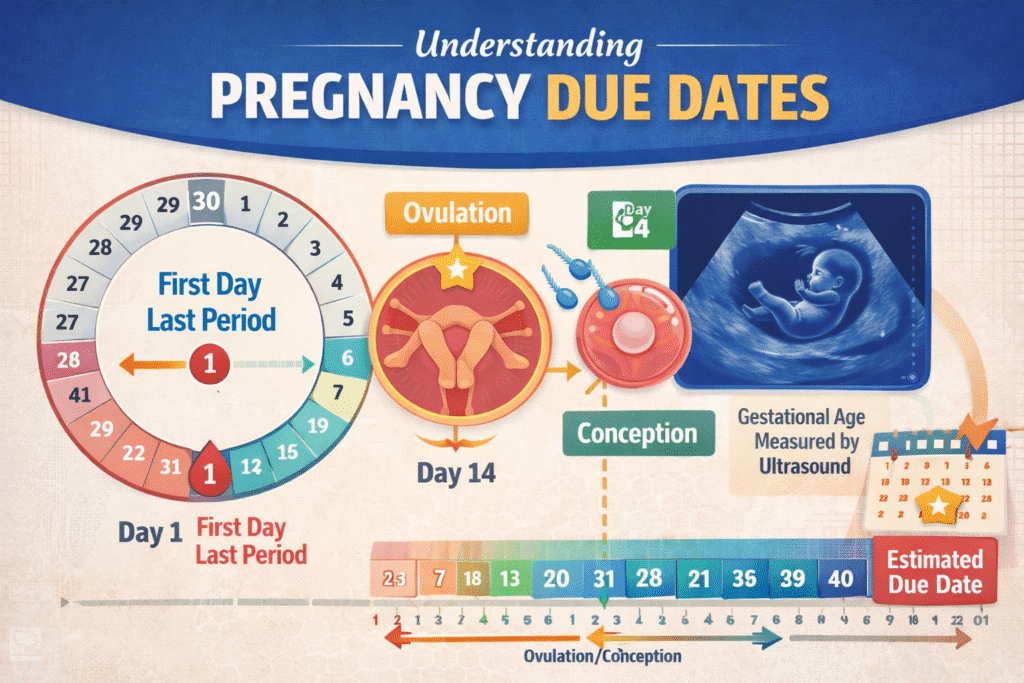
How Estimated Due Dates Are Calculated
Before we dive into accuracy, it helps to understand how due dates are usually calculated:
- Most online calculators — including the one linked above — start with the first day of your last menstrual period (LMP) and add about 280 days (40 weeks).
- Some also let you enter your conception date or ultrasound measurements for more precise estimates. (Today’s Parent)
This method works well for many people — but it assumes that ovulation always happens at the same time (which it doesn’t), and that every pregnancy lasts exactly the same number of weeks. That’s where inaccuracies begin. (Cascade Women’s Health)
1. Variation in Ovulation and Menstrual Cycles
One of the biggest reasons due dates can be off is simple biology:
- Not everyone ovulates on day 14 of their cycle.
- Women with longer or irregular cycles tend to ovulate later — pushing the actual conception date further out. (pregnancybirthbaby.org.au)
If your ovulation date differs from the assumed timeline in due date calculators, your estimated due date will shift too. This is why ultrasound dating is often more accurate: it measures the baby, not just estimates based on calendars. (The ObG Project)
2. Genetics and Natural Variation in Pregnancy Length
Pregnancy isn’t a one‑size‑fits‑all process. Research shows that genetics influences how long pregnancies last — including variations passed down from parents. Some women naturally have longer or shorter gestational periods, and this biological variation affects due date accuracy. (aims.org.uk)
This means two women with the same conception date might still deliver on different dates — and that’s perfectly normal.
3. Ultrasound Timing and Measurement Methods
Ultrasounds can greatly improve due date accuracy — but only when done early:
- First‑trimester ultrasounds (usually before 13–14 weeks) are the most accurate for determining gestational age. (The ObG Project)
- Later ultrasounds become less reliable for dating, because babies grow at slightly different rates as pregnancy progresses. (Vinmec International Hospital)
Even ultrasound measurements have a margin of error, and tiny differences in fetal size can slightly shift your due date.
4. Irregular Periods and Inaccurate Recall
Many due date errors come from simply not knowing when conception occurred:
- If your menstrual cycles vary month to month, using the LMP as the starting point becomes less accurate.
- Not remembering the exact first day of your last period can also shift the calculation. (PMC)
This is one of the key reasons healthcare providers often revise your due date after an early ultrasound.
5. Maternal Health and Pregnancy Factors
Certain characteristics and conditions can subtly influence gestational duration and dating accuracy:
- Maternal age and weight — both can affect how pregnancy progresses and how scans interpret fetal size. (Dr Sara Wickham)
- Multiple pregnancies (twins or more) often result in earlier births.
- Some health conditions can affect fetal growth patterns — making dating scans less precise.
These variables don’t mean a problem — they simply highlight the biological uniqueness of every pregnancy.
6. Natural Variability in When Babies Arrive
Even with perfect dating methods, due dates are still estimates.
- Most babies are born within about two weeks before or after their due date. (Wikipedia)
- Only a small percentage arrive exactly on the predicted day. (The Mindful Birth Group)
This is because labor is triggered by complex signals from both mom and baby — not a calendar. Many healthcare providers consider birth up to a week before or after the due date completely normal.
Why Due Dates Still Matter
Even if due dates aren’t perfectly precise, they are critical for:
- Scheduling prenatal tests (bloodwork, ultrasounds) at the right times
- Monitoring fetal development and growth
- Planning for delivery and postpartum care
Instead of thinking of your due date as a deadline, see it as the center of a healthy range — and an opportunity to prepare emotionally and logistically for your baby. 🔗 Check your estimated due date now with our Pregnancy Due Date Calculator.
https://www.mywellcal.com/pregnancy-due-date-calculator/
Takeaway
Pregnancy due dates are powerful planning tools — but they’re not exact. Everything from when you ovulate, to ultrasound timing, to genetics and fetal growth patterns can influence how accurately a due date predicts your baby’s arrival. Most importantly, remember this:
Due dates estimate, your baby decides.
Understanding what affects due date accuracy helps you stay informed, prepared, and focused on what truly matters — a healthy pregnancy and baby.
