
How to Calculate BMI and Body Age for Fitness
When it comes to fitness, knowing your body mass index (BMI) and body age can be essential tools in tracking your health and fitness progress. These two metrics not only help assess your current state but also guide you on how to improve your fitness level. This article will walk you through how to calculate BMI and body age for fitness and why these numbers are more than just statistics – they are indicators of your overall well-being.
What is BMI?
Body Mass Index (BMI) is a simple method used to assess whether you are in a healthy weight range based on your height and weight. It is a widely used metric in fitness and healthcare as it provides a quick and easy way to assess body fat.
How to Calculate BMI
The BMI formula is: BMI=Weight (kg)Height (m)2\text{BMI} = \frac{\text{Weight (kg)}}{\text{Height (m)}^2}BMI=Height (m)2Weight (kg)
- Weight is measured in kilograms (kg).
- Height is measured in meters (m).
Once you have the numbers, you simply divide your weight by the square of your height.
BMI Categories
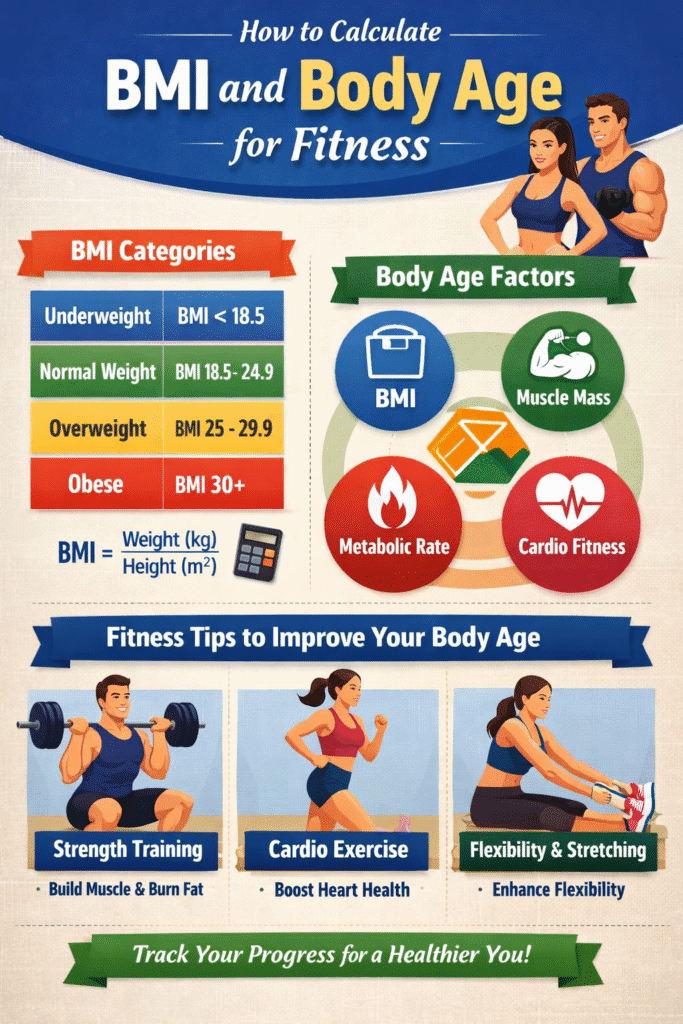
Your BMI will fall into one of the following categories:
- Underweight: BMI less than 18.5
- Normal weight: BMI between 18.5 and 24.9
- Overweight: BMI between 25 and 29.9
- Obesity: BMI of 30 or more
These categories are important because they help you understand your body composition. A normal BMI typically indicates a healthy amount of body fat, whereas overweight or obesity may indicate excess fat, which can increase health risks.
Image Suggestion:
A chart or infographic showing BMI categories and their corresponding health risks would be helpful here.
What is Body Age?
Body age is a concept that reflects how your body’s physical condition compares to your chronological age. It takes into account various factors, including your BMI, muscle mass, metabolic rate, and overall fitness level. Your body age can differ from your actual age – for example, someone with a higher fitness level than their age group might have a body age that’s younger than their chronological age.
How to Calculate Body Age
There isn’t a single formula for calculating body age, but it generally involves a combination of several measurements and assessments. The most common factors are:
- BMI: Higher BMI levels usually correlate with older body age due to excess body fat.
- Muscle Mass: More muscle can indicate a younger body age, as muscle mass typically decreases with age.
- Metabolic Rate: A higher metabolism suggests a younger body age because it shows the body is more efficient in burning energy.
- Cardiovascular Health: Regular physical activity and a healthy heart contribute to a younger body age.
- Flexibility: Maintaining flexibility is another indicator of a youthful body.
There are various online body age calculators that combine these factors to provide an estimate of your body age, which can help assess whether your fitness routine is working or if you need to make adjustments.
Image Suggestion:
An infographic showing the relationship between BMI, muscle mass, and body age would be a great visual aid here.
How to Use BMI and Body Age to Improve Your Fitness
Once you’ve calculated both your BMI and body age, the next step is to use this information to make informed decisions about your fitness. Here are some tips on how to proceed:
1. Adjust Your Diet for Your BMI
If your BMI falls into the overweight or obese categories, focusing on a healthy, balanced diet is crucial. Incorporating more whole foods, such as fruits, vegetables, lean proteins, and whole grains, will help you reduce excess body fat.
2. Incorporate Strength Training to Reduce Body Age
To decrease your body age and improve your overall fitness, strength training is key. Building muscle helps reduce fat, increase metabolism, and lower your body age. Even if you have a higher BMI, adding lean muscle can help improve your health and fitness.
Image Suggestion:
A photo or illustration of someone performing strength exercises (e.g., lifting weights, squats) would be beneficial here.
3. Improve Cardiovascular Health
If your body age is higher than your actual age, focusing on improving cardiovascular health can be beneficial. Incorporating regular aerobic exercises like running, cycling, or swimming can help reduce body age, improve endurance, and lower BMI.
4. Focus on Flexibility
A key component in overall fitness is flexibility. Regular stretching or yoga can help reduce stiffness, improve posture, and contribute to a younger body age. Even if your BMI is slightly higher, maintaining flexibility can still help you feel younger.
Why Tracking Your BMI and Body Age is Important for Fitness
Understanding your BMI and body age gives you a clearer picture of your fitness journey. Here’s why these metrics matter:
- Track Progress: Monitoring changes in BMI and body age over time helps you see improvements in your fitness level.
- Set Realistic Goals: By understanding where you stand, you can set personalized fitness goals based on your current body composition.
- Overall Health Assessment: BMI and body age can help identify potential health risks, such as heart disease or diabetes, and prompt you to take action to improve your health.
Conclusion
Calculating your BMI and body age is a simple yet effective way to measure your fitness and overall health. By understanding how these two metrics work together, you can take targeted steps to improve both your fitness and your health. Remember, while BMI is a useful tool, it doesn’t tell the whole story, so including other factors like muscle mass, cardiovascular health, and flexibility can give you a fuller picture of your body age.
